Cyberflash Display Font: Hands-On Review for Makers & Sellers
The first time I pulled up Cyberflash, I was sitting cross-legged on my studio floor with a stack of kraft paper labels, a cup of coffee, and a stubborn candle design that just wouldn’t settle. I’d tried a dozen fonts already — some too stiff, others too whimsical. Then I typed the scent name in Cyberflash, and the whole mockup shifted. It had that rare combination of familiar warmth and fresh personality, as if it had gently borrowed from classic type books but refused to be outdated. It felt like the exact kind of display font a handmade seller dreams about: distinctive enough to become a signature, yet calm enough to let the product breathe.
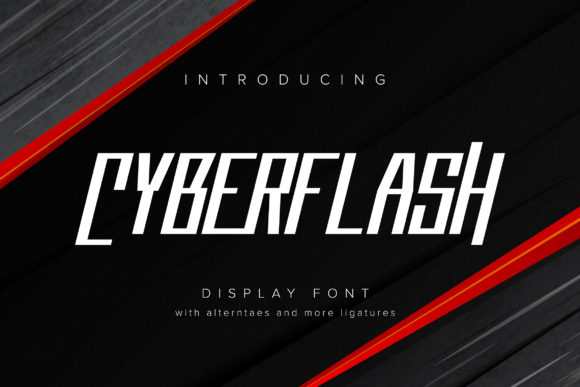
Over the next few weeks, I tested this creative font across nearly every material in my shop rotation — from candle labels and greeting cards to tote bag mockups and printable wall art. What I discovered was a typeface that doesn’t just sit on a design but actually anchors it. Cyberflash is inspired by classic typography and brings its own unique style to any design project, and that balance is what makes it so endlessly usable for makers. It’s the kind of font that turns a simple product tag into something that feels like a boutique find.
Cyberflash for Candle Labels and Small Business Packaging
As a display choice for candle labels, Cyberflash truly shines. I created a label for a bergamot and cedar candle using the font for the scent name, and the letters held their crisp edges beautifully even at a modest size. Because this fantastic fonts option is best suited for headlines of all sizes as well as for blocks of text, I had no trouble using it for a short ingredient list printed in a slightly smaller size. The serifs are sturdy but not too sharp, which means the text remained legible when printed on textured kraft paper — a huge win when your labels have to look good under real-life lighting.
For boutique packaging, Cyberflash adds an editorial warmth that many handmade sellers crave. I used it on a hang tag for a linen spray, pairing the product name with a clean sans serif for the description. The result was packaging that felt intentional, almost like something from a heritage brand, but still grounded in a small-shop aesthetic. If you sell anything that relies on shelf presence — jars, tins, botanical extracts — this font transforms a humble label into a storytelling piece.
Cyberflash on Wedding Invitations and Luxe Stationery
Wedding stationery requires a typeface that can handle both the grand gesture and the tiny detail. Cyberflash delivered on both fronts when I mocked up an invitation suite. The main couple names, set in a larger weight, looked like they belonged on a letterpress plate — elegant but modern, never cold. As a display font, it has a natural rhythm that makes each letter feel intentionally drawn rather than mechanically placed. That quality matters deeply when you’re designing items that people will frame or tuck into memory boxes.
I also tested it on a welcome sign and table numbers. Even when blown up to 72 points and beyond, the letters kept their poise, with no awkward thinning in the curves. For enclosure cards and directions, I set the font at a slightly smaller size for a short paragraph; it remained readable without losing its decorative character. This is a typeface you can trust across an entire stationery suite, which means you can build strong, cohesive branding for your invitation design clients without hunting down multiple fonts.
Printable Wall Art and Etsy Digital Downloads with Cyberflash
If you sell digital products, you know that typography can make or break a listing. I designed a farmhouse-style printable using Cyberflash for the main quote, layered over a watercolor background. The font’s classic bones gave the piece a timeless feel, while its subtle quirks — a slight flare here, an unexpected terminal there — kept it from looking like every other “live laugh love” print. As a display asset for Etsy downloads, it adds a level of polish that buyers associate with premium design.
I also used it for a set of planner divider tab pages and a birth announcement template. In both cases, the font’s ability to handle short blocks of text meant I could set month names, little taglines, and even a brief welcome message without switching typefaces. The file I tested came with clean OTF and TTF formats, and the letters transferred seamlessly between Photoshop and Illustrator, making it a practical addition to my design kit. For digital sellers, Cyberflash fonts bring that high-end look without the fuss of overly ornate alternates.
Cyberflash Font Pairing for Cohesive Maker Branding
One of the smartest moves I made while testing this font was pairing it with a minimal sans serif for longer descriptions and product details. Cyberflash carries enough personality on its own, so letting it breathe next to something like an open, geometric sans creates visual balance. On a tote bag mockup, the main tagline in Cyberflash sat beautifully above a tiny website URL in a simple sans; the contrast felt designed, not accidental. This display font works best when it’s the star, and a quiet supporting typeface gives it the space to perform.
For makers building a full shop brand, font pairing isn’t just about taste — it’s about consistency across product categories. I used the same Cyberflash-plus-sans combination on a mug, a thank-you card, and a sticker sheet, and the result was a cohesive family of items that could immediately be recognized as coming from the same studio. If you lean toward script or handwritten secondary fonts, test a light hand-lettered style for note cards; the warmth of Cyberflash complements organic lettering without competing. This flexibility means the font fits into both polished and homespun shop aesthetics.
Licensing and File Formats: Using Cyberflash in Commercial Crafts
Before pressing “cut” on a Cricut or uploading to a print-on-demand platform, it’s essential to know exactly what your license allows. The version of Cyberflash I reviewed included standard OTF and TTF files, and the glyph window revealed a generous set of uppercase and lowercase characters, numbers, and basic punctuation. Some display fonts in this category hide only uppercase letters or limited punctuation, but Cyberflash stood out for being fully functional, which is critical when you’re typing real product descriptions or nutrition facts on labels.
I tested cutting the font on adhesive vinyl at various sizes. At one inch and above, the letters weeded cleanly, even the delicate serifs. For very small stickers under half an inch, I’d recommend adding a slight offset or using the sans serif pairing for small text — not a fault of the font, just the reality of cutting machine precision with a decorative display style. For printed materials, however, it held up at 8 points on a high-quality laser print, so tags and small label information are absolutely doable.
Makers selling physical products, digital templates, or SVG-style designs will want to confirm that the font’s commercial license covers their specific use. Most shop-friendly fonts offer extended licenses for things like merchandise or logos, and it’s worth double-checking ahead of launch day. From what I’ve seen, Cyberflash is built with small businesses in mind, and the file includes everything needed to start creating immediately, whether for print, digital downloads, or sublimation crafts.